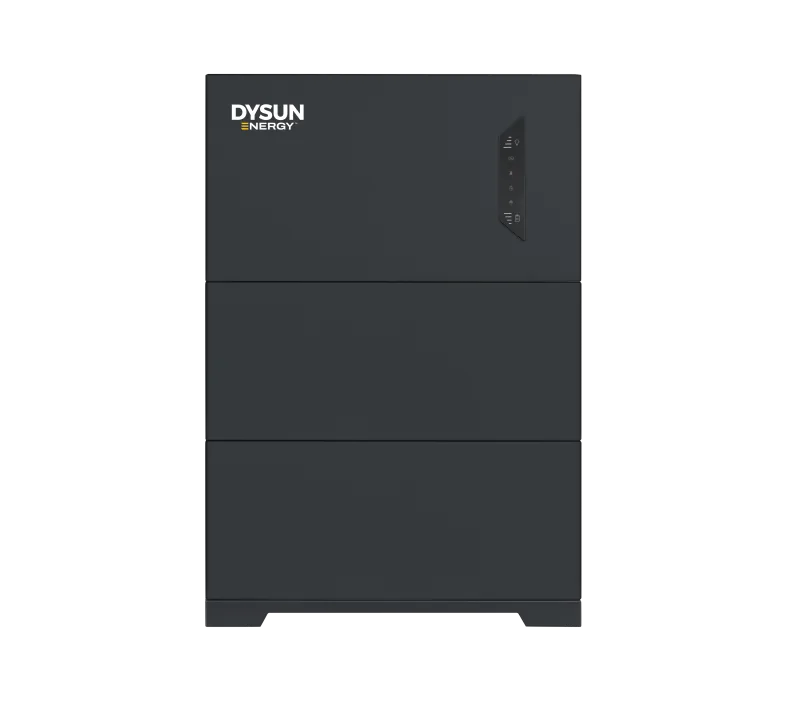
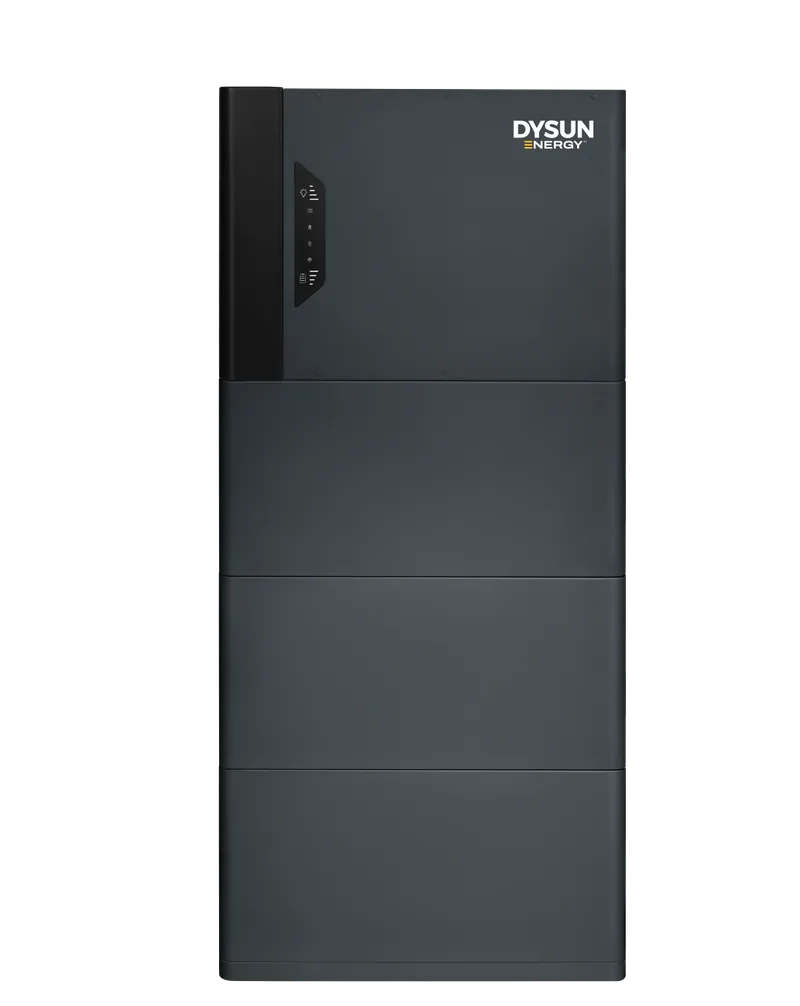
The FlexVolt One is not a loose battery but your whole storage installation.

Battery, hybrid inverter and energy control sit in the same cabinet. You choose the LV for a single-phase connection or the HV for three-phase, and expand later with an extra module instead of a second installation.

The FlexVolt One HV, layer by layer

What is inside the cabinet is hard to picture while the door is shut. Choose your version, pull the system apart and click a part — or a number — to see what it does.

11.4 kWh · 3 modules Drag horizontally in the drawing to turn the set-up around.

Hybrid inverter — FlexAmp One

01 · On top of the stack

    Key figures

    Scale drawing of the 11.4 kWh version with three modules. Dimensions and specifications according to the FlexVolt One HV manual V3.0.

    Seven layers between you and a problem

    With a home battery, safety is not a side issue. Our protection works in seven layers, from the individual cell to the transport to your front door.

    FlexVolt One · one module, exploded view

    Schematic view. Outer dimensions follow the specifications; the position of internal parts is indicative.

    What that gives you once the system is on the wall

    An integrated design is not a goal in itself. The noticeable difference is in the installation day, in the room to grow, and in what is still needed afterwards.

    Fewer cables, shorter installation

    The cable-free design saves up to 50% of the installation time. Your installer is finished sooner and there are fewer loose connections in the system that have to be checked.

    Expanding without starting over

    The design is modular: up to sixteen modules on one system. If your consumption grows because of a heat pump or a second car, you add a module.

    You can see what the system does

    Through the app and the web environment you follow generation, consumption and state of charge, and pick one of the smart energy modes. The energy management system is built into the inverter and comes as standard: it steers charging and discharging on live electricity prices. If you want your heat pump or charger in the loop as well, FlexGrid extends that. Not a black box on the wall.

    Maintenance without anyone coming round

    Remote diagnostics and over-the-air updates keep the system current. Many questions can be answered without an engineer getting into a van.

    Retrofit

    Already have solar panels? Then nothing has to go.

    The FlexVolt is placed next to your existing inverter, not in its place. Your panels, your inverter and your cabling stay as they are; the battery is added as its own circuit. That is why it works alongside virtually any inverter, whatever the brand.

    These are the inverter brands we come across most often in practice. It is not an exhaustive list and not a guarantee per model: your installer checks the combination at your home before anything is ordered. Brand names and logos are the property of the manufacturers concerned; mentioning them does not imply a partnership.

    Your installation stays intact

    No new inverter, no new string cabling, no changes to your panels. What is there stays there; the storage is added to it.

    Worthwhile without solar panels too

    The battery also works without generation: charging when electricity is cheap and using it when it is expensive. Solar panels are not a condition.

    The installer checks the combination

    The meter cupboard, the connection and the existing inverter are inspected on site. If something turns out not to be possible, you hear that BEFORE the order and not on installation day.

    What does that add up to? Three worked examples

    No two homes are the same, but these three situations give an honest picture. Calculated with our own savings calculator, assumptions below.

    Small household · single-phase

    2,500 kWh a year, 8 solar panels

    With a 5.12 kWh battery

    € 523a year

    payback period ± 5.4 years

    Average household · single-phase

    3,500 kWh a year, 11 solar panels

    With a 10.24 kWh battery

    € 823a year

    payback period ± 5.2 years

    Large household · three-phase

    5,500 kWh a year, 16 solar panels

    With an 11.4 kWh battery

    € 1,277a year

    payback period ± 4.6 years

    Calculated on 24 August 2026 with the Dysun Energy savings calculator, for the Dutch market. Assumptions: electricity price € 0.34 per kWh, feed-in payment € 0.05 per kWh (an assumption, not a fixed tariff: the legal minimum from 2027 is 50% of the bare supply rate and may be higher), a conservatively assumed round-trip efficiency of 90% (specification 95%), including the end of Dutch net metering in 2027 and expected feed-in charges, excluding the HEMS subscription. These amounts follow Dutch tariffs and Dutch rules and do not transfer to another country. What your home saves depends on your consumption, your panels and your contract — work it out yourself.

    On 1 January 2027 Dutch net metering ends. Surplus you feed in then earns far less than you pay for electricity — and your supplier may charge feed-in costs on top. What you store and use in the evening is electricity you no longer have to buy at the full rate.

    Your connection decides which version you need

    Both versions are all-in-one and share the same basis: LFP cells, 95% depth of discharge, 7,000 cycles, IP66 and a 10-year warranty. The difference is in the voltage, the power and the steps in which you expand.

    FlexVolt One LV with two battery modules on the main control module, 10 kWh together

    Shown: 10 kWh · 2 modules

    FlexVolt One LV — single-phase

    System energy
    5.12 – 20.4 kWh
    Usable per module
    4.75 of 5.12 kWh
    Inverter
    3.68 / 5 / 6 kW
    Charge current
    up to 125 A

    If you have a single-phase connection, the LV is the version that goes with it. You start with one module and build up in steps of 5.12 kWh.

    The LV charges and discharges at high current. A peak in your consumption therefore comes out of the battery rather than off the grid, and in a cheap hour you can charge it hard.

    FlexVolt One HV with three battery modules under the integrated inverter, 11.4 kWh together

    Shown: 11.4 kWh · 3 modules

    FlexVolt One HV — three-phase

    System energy
    7.6 – 22.7 kWh
    Usable per module
    3.6 of 3.8 kWh
    Inverter
    8 / 10 / 12 kW · three-phase
    Expandable
    up to 81.6 kWh

    If you have three-phase, a heat pump and perhaps a charging point, the HV is the heavier choice. Expanding goes in modules of 3.8 kWh.

    Dysun Energy positions it as the integrated battery solution for premium installations with high demands: in development since 2014 to automotive standards, Tier-1 LFP cells and seven-layer safety protection.

    Exactly what is inside the cabinet

    The figures for battery and inverter together, so you can put them next to a quote or an existing installation.

    FlexVolt One LV — single-phase, hybrid 3.6 to 6 kW

    Battery type
    LFP (LiFePO4)
    System energy
    5.1 – 20.4 kWh
    Energy per module
    5.12 kWh
    Usable per module
    4.75 kWh
    Depth of discharge
    95%
    Nominal voltage
    51.2 V (44.8 – 56.5 V)
    Max. charge/discharge current
    80 / 100 / 125 A
    Connectable modules
    max. 16 · 100 – 400 Ah
    Standby consumption
    < 2 W
    Service life
    7,000 cycles
    Internal resistance
    < 20 mΩ
    DC power switch
    125 A
    Module dimensions (w×h×d)
    670 × 315 × 230 mm
    Protection
    IP66
    Weight per module
    47 kg
    Operating temperature
    −20 to 55 °C
    Warranty
    10 years modules · 5 years inverter · 70% after 7,000 cycles
    Inverter
    FlexAmp One 3.6 / 5 / 6
    Nominal AC power
    3.68 / 5 / 6 kW
    Max. apparent power
    7.36 kVA
    Grid connection
    230 V (single-phase) · 50/60 Hz
    MPPT trackers
    2 · 1 string per tracker
    Max. input current per MPPT
    20 A · short-circuit current 25 A
    MPPT voltage range
    120 – 480 V · start 120 V
    MPPT efficiency
    99.9%
    European efficiency
    96.3%
    Backup output
    400 V (three-phase) · < 10 ms
    Noise level
    < 25 dB · natural convection
    System dimensions (w×h×d)
    725 × 740–1640 × 230 mm
    System weight
    75 / 121 / 167 / 213 kg
    Battery communication
    CAN & RS-485
    Inverter communication
    RS-485 / WLAN / BT / LAN / 4G
    Certification
    CE · IEC/EN 62619 · UN 38.3

    FlexVolt One HV — three-phase, hybrid 8 to 12 kW

    Battery type
    Tier-1 LFP
    System energy
    7.6 – 22.7 kWh
    Expandable to
    81.6 kWh
    Energy per module
    3.8 kWh
    Usable per module
    3.6 kWh
    Depth of discharge
    95%
    Nominal voltage per module
    102.4 V (89.6 – 113.0 V)
    System voltage
    204.8 – 614.4 V · 2 to 6 modules
    Max. charge/discharge current
    37 A
    Connectable modules
    2 to 6 · 37 Ah per module
    Standby consumption
    < 2 W
    Service life
    7,000 cycles
    Internal resistance
    < 20 mΩ
    DC power switch
    125 A
    Module dimensions (w×h×d)
    670 × 315 × 230 mm
    Protection
    IP66
    Weight per module
    38 kg
    Operating temperature
    charging −10 to 50 °C · discharging −10 to 55 °C
    Warranty
    10 years modules · 5 years inverter · 70% after 7,000 cycles
    Inverter
    FlexAmp One 8 / 10 / 12
    Nominal AC power
    8 / 10 / 12 kW
    Max. apparent power
    8.8 / 11 / 13.2 kVA
    Grid connection
    380 / 400 / 415 V (three-phase)
    Wiring
    L1/L2/L3-N-PE
    MPPT trackers
    2 · 2 strings per tracker
    Max. input current per MPPT
    16 A · short-circuit current 24 A
    Max. PV input voltage
    1000 V · MPPT 150 – 950 V
    MPPT efficiency
    99.9%
    European efficiency
    97.5%
    Backup output
    400 V (three-phase) · < 10 ms
    Noise level
    < 35 dB · natural convection
    System dimensions (w×h×d)
    670 × 1135–2395 × 230 mm
    System weight
    117 / 155 / 193 / 231 / 269 kg
    Communication
    CAN / RS-485 / WLAN / BT / LAN / 4G
    Mounting
    floor mounted, locked with a wall bracket

    Specifications from brochure v3 and the datasheets of the FlexVolt One LV and HV. Do you work as an installer and want to fit the FlexVolt One? Then read what working with Dysun Energy involves.

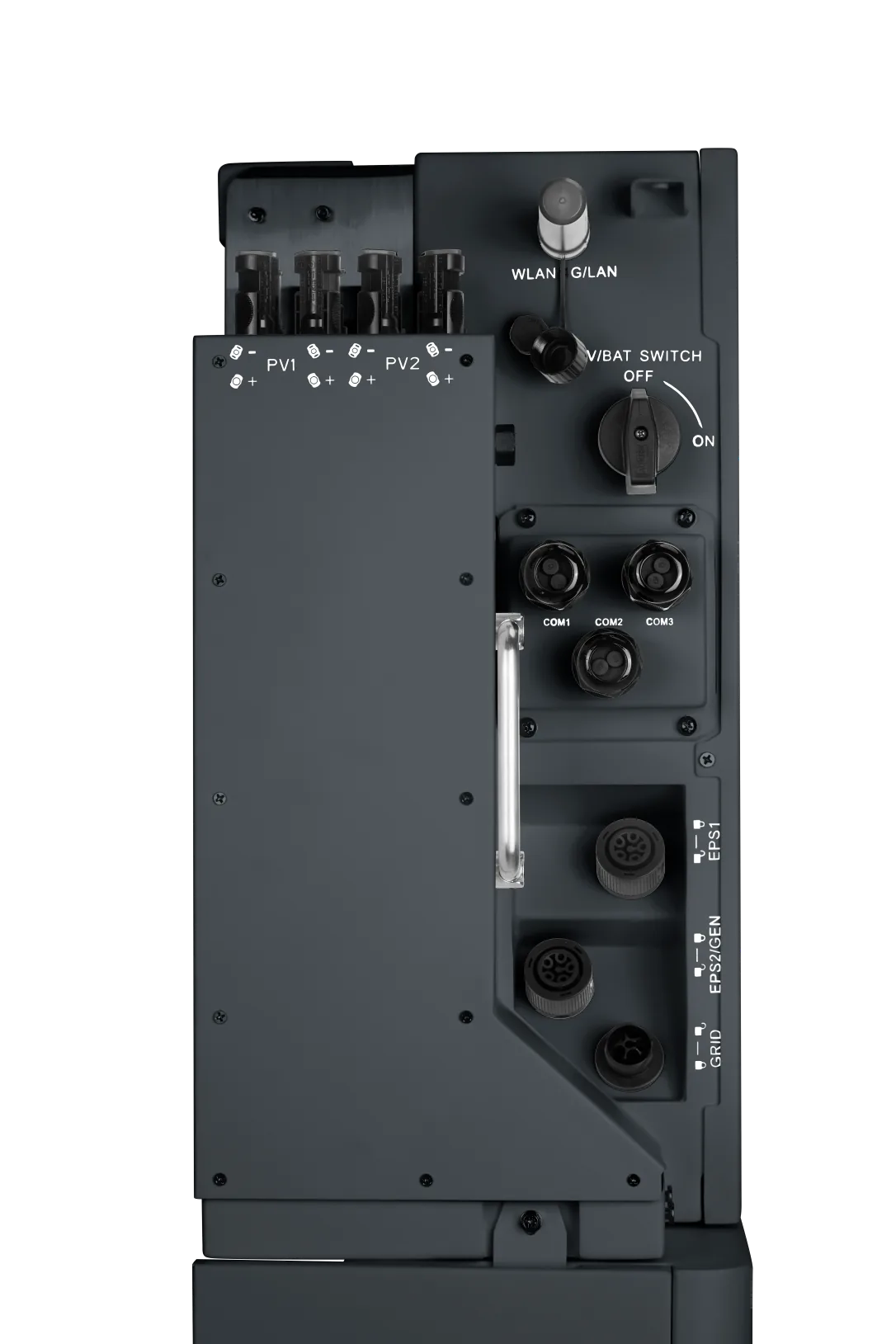
    The connection side of the FlexVolt One with the separate backup output

    Backup output

    The inverter already has a backup output of its own

    Next to the grid connection, the FlexAmp One has a separate backup output. You put the circuit behind it that always has to keep running — refrigeration, lighting, router, heating. If the grid drops out, that output takes over within 10 milliseconds.

    It is a UPS function at circuit level, not a whole-house installation: the output feeds what hangs behind it and no more than that. If you want the entire home to keep running, the FlexSwitch One below is the right choice.

    That gives three ways to use the FlexVolt One: on-grid for your own consumption, on-grid with backup so the home keeps running during an outage, or fully off-grid.

    Switchover
    < 10 ms
    Output voltage
    230 V · 50/60 Hz
    Distortion (linear load)
    THDv < 3%
    LV · apparent power
    3,680 / 5,000 / 6,000 VA
    LV · max. output current
    16 / 21.7 / 26.1 A
    HV · apparent power
    8,000 / 10,000 / 12,000 VA
    HV · max. output current
    11.6 / 14.5 / 17.4 A
    Anti-islanding protection
    present

    Values per inverter version: LV is FlexAmp One 3.6 / 5 / 6, HV is FlexAmp One 8 / 10 / 12. The switchover time comes from brochure v3; the power ratings and currents from the datasheets.

    FlexSwitch One

    When the grid fails, the lights stay on

    During a grid outage every home battery is required to shut itself down — that is the anti-islanding protection. Without a transfer switch, even a full FlexVolt delivers nothing. The FlexSwitch One is the link that solves it.

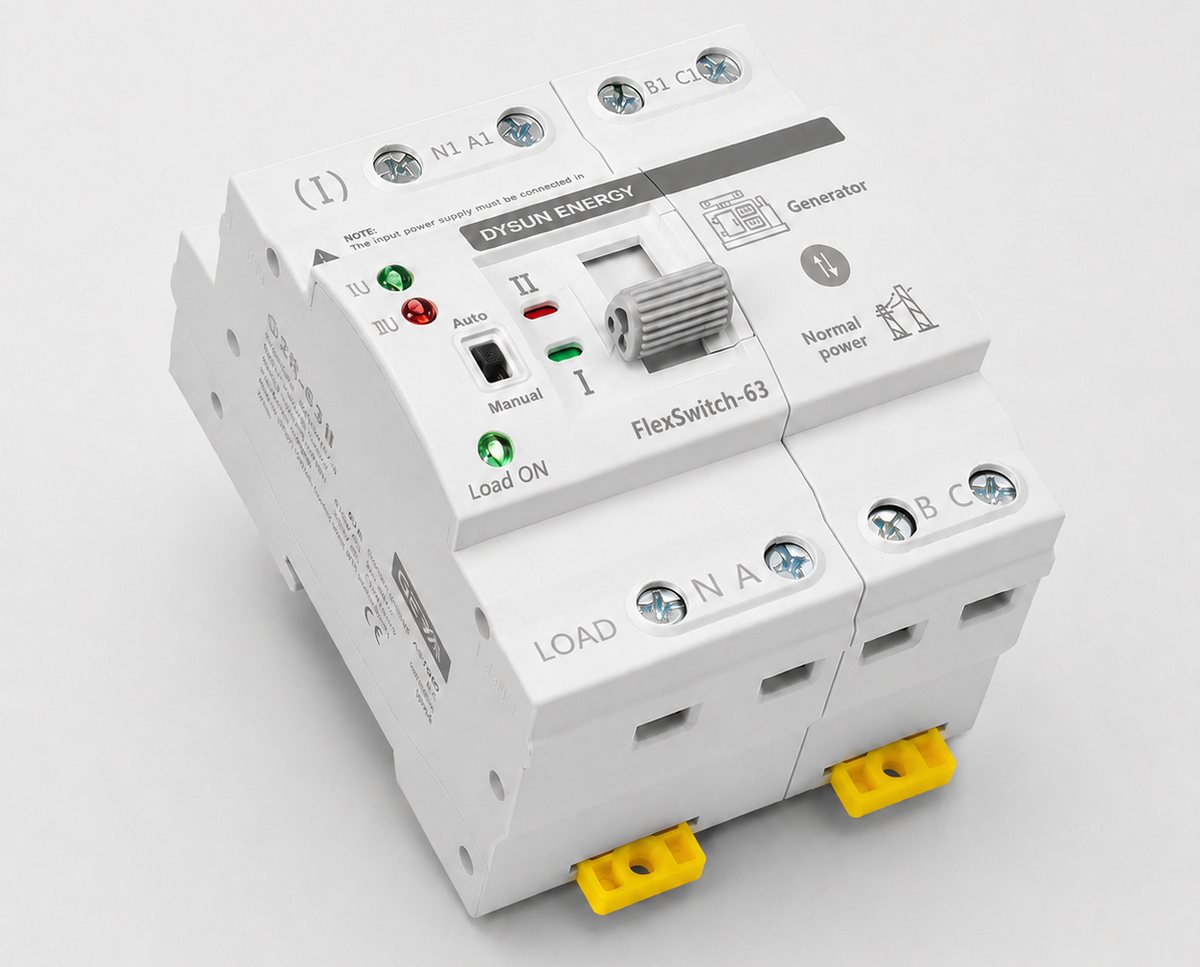
    It monitors the grid voltage continuously and switches your home over to the battery in less than 50 milliseconds. Router, fridge, lighting and heating keep running; faster than a flicker.

    FlexSwitch One, the automatic transfer switch by Dysun Energy for DIN rail mounting
    1. Measuring

      The transfer switch permanently measures the voltage on the grid side. An outage, undervoltage below 175 V or overvoltage above 275 V is recognised immediately.

    2. Switching over

      The contact switches mechanically to the FlexVolt side. Contactor, control and return switching: all completed within 50 milliseconds.

    3. Switching back

      If the grid returns stably within the safe voltage band, the FlexSwitch switches back by itself after a 30-second check period. Your battery charges up again for the next time.

    Switchover time
    < 50 ms
    Switch back
    automatic after 30 s
    Version
    2-pole (LV) / 4-pole (HV)
    Operating current
    6 – 63 A
    Grid voltage
    230 V / 3×400 V · 50 Hz
    Mounting
    DIN rail 35 mm · PC class
    Standard
    IEC 60947-6-1
    Certification
    CE · CB

    The FlexAmp One also has its own 230 V backup output that takes over within 10 ms — enough for a single circuit. For a whole home the FlexSwitch One is needed. Fitting it in the distribution board is done by a qualified electrician, in line with the local wiring rules.

    Built for the days when things go wrong

    The cells are Tier-1 LFP with seven-layer safety protection in an IP66 enclosure. The system watches for overvoltage, leakage current and fire by itself, and development has been running to automotive standards since 2014.

    Every module has its own heating

    A home battery is rarely in the warm living room. That is why every module of 5.12 kWh has a heating module, so the system keeps working reliably down to below −20 °C. Charging and discharging is allowed between −20 and 50 °C, so an unheated garage or shed is no objection.

    You can see whether it arrived in one piece

    Transport damage often does not show on the outside. Every module therefore carries G2 ShockWatch impact indicators, which record whether there were knocks during transport and installation. On delivery you can see whether the product arrived undamaged.

    Certification of the FlexVolt One

    CE UKCA UL 1973 UL 9540 UN 38.3 MSDS CEI 0-21

    Dysun Energy assurance

    Warranty
    10 years on the battery
    Capacity warranty
    70% after 7,000 cycles
    Cell technology
    LFP (LiFePO4)
    Safety
    7 layers
    Enclosure
    IP66
    Support
    from the Netherlands

    These are the values you can hold us to. See the warranty terms or read why a Dysun Energy system offers certainty

    From advice to a working home battery

    Five steps, of which the last one does not end. You are not buying a cabinet on the wall but a system that has to last for years.

    1. Home check

      We look at your annual consumption, your solar panels and the type of connection in your meter cupboard. That decides whether the LV or the HV fits and how many modules you need.

    2. Personal advice

      You get a proposal for capacity and set-up, calculated on your own figures. If you have doubts about the outcome, we go through it together before anything is ordered.

    3. Certified installer

      Delivery in the Netherlands runs through our network of certified installers. A partner in your region checks the situation on site before the installation is scheduled.

    4. Installation and handover

      Battery, inverter and control are fitted and set up. Work on the distribution board, such as the FlexSwitch One, is done by a qualified electrician in line with the local wiring rules.

    5. We stay involved afterwards

      Through FlexGrid you can see what the system does, and the warranty period simply runs on. Questions about a system that is already installed go to support@dysun.energy or +31 (0)85 800 1730.

    Which set-up suits your home?

    Send us your annual consumption and the type of connection, and we will work out whether the LV or the HV fits, how many modules you need and what the system returns.

    Calculate your savings