

For businesses and projects that need more storage than an average home, Dysun Energy delivers the same modular technology, only in a larger set-up. You build a system from individual battery modules and expand when consumption asks for it. This page describes what we deliver at the moment, and no more than that.
You start small and stack up
A storage system from Dysun Energy consists of modules with LFP cells that you place next to or on top of each other. You do not fix the final size in advance: you start with what is needed now and add when consumption changes.
The three-phase FlexVolt One HV is the system for that: modules of 3.8 kWh and a basic set-up of 7.6 to 22.7 kWh, six modules per system and up to eighteen with three systems in parallel. PCS, EMS and BMS sit in one system, so no separate cabinets, cabling or suppliers.
If the connection is single-phase, the FlexVolt One LV comes into view: modules of 5.12 kWh, system energy from 5.1 to 20.4 kWh and a maximum of sixteen connectable modules. Which of the two fits depends on your connection, your peak power and the space the system will stand in.
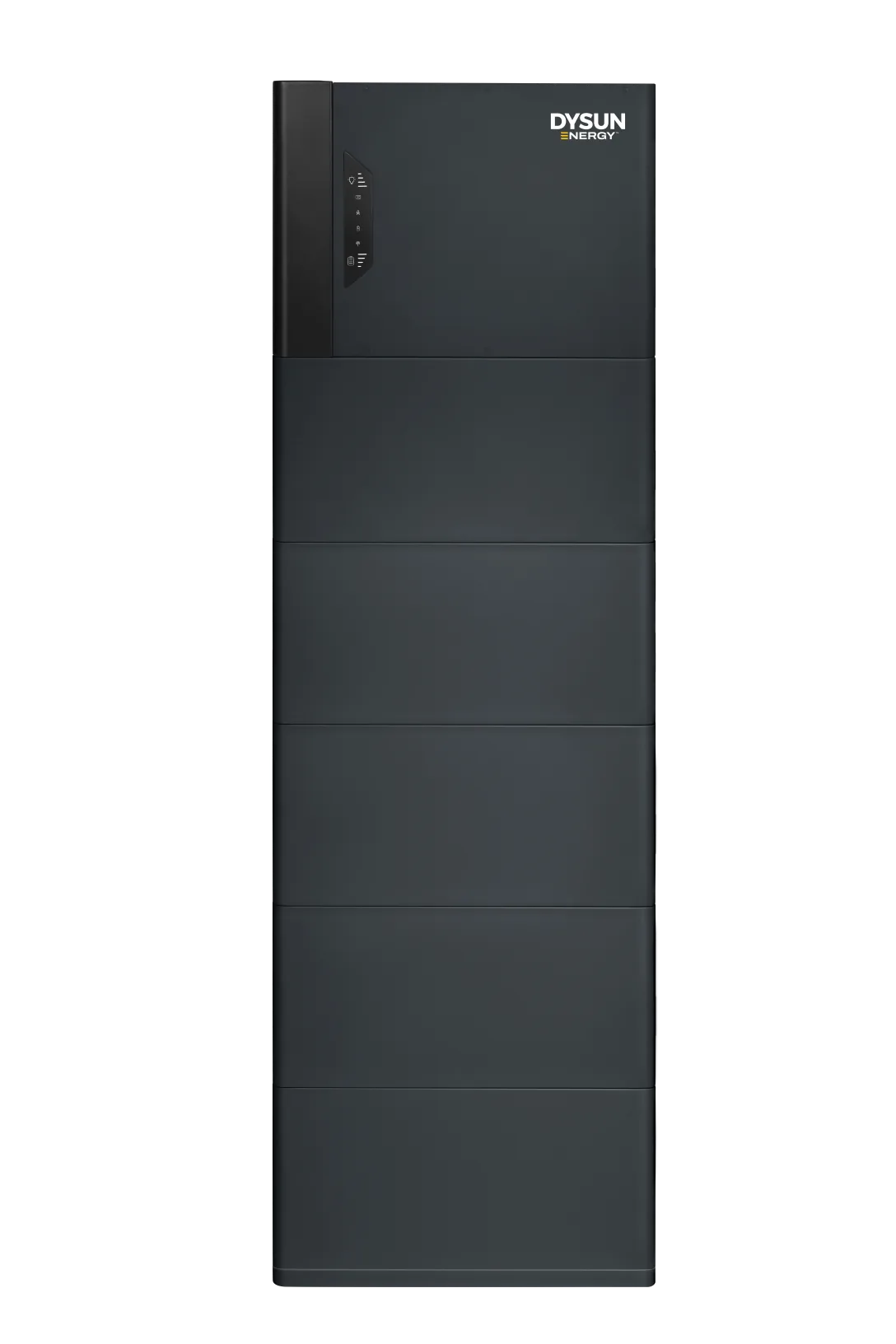
The figures per system
The values below apply to the FlexVolt One HV, the three-phase system we use for larger set-ups. They describe what one system does; about configurations beyond that we deliberately make no claims on this page.
- Cell chemistry
- LFP (LiFePO4)
- Connection
- three-phase
- Capacity per module
- 3.8 kWh
- System energy
- 7.6 - 22.7 kWh
- Modules per system
- 2 to 6
- Nominal voltage
- 102.4 V (89.6 - 113.0 V)
- Usable capacity
- 95% (DoD 95%)
- Maximum current
- 37 A
- Standby consumption
- < 2 W
- Service life
- 7,000 cycles
- Protection rating
- IP66
- Operating temperature
- charging -10 to 50, discharging -10 to 55 degrees Celsius
- Weight per module
- 38 kg
- Warranty
- 10 years modules · 5 years inverter · 70% after 7,000 cycles
The system is delivered including a heating module, so it stays within its working range at low temperatures too. Placement is on the floor, locked with a wall bracket, on-grid, on-grid with backup or fully off-grid.
Storage is only useful once there is control behind it
Capacity alone saves nothing. What a system returns depends on the moment it charges and discharges. For that we use FlexGrid, the energy management system that drives the installation and connects it to the market.
It talks to what is already there
FlexGrid supports more than 500 communication protocols and so connects to virtually every existing energy system. Solar panels, charging points, heat demand and storage come under one control, instead of each part deciding for itself.
It calculates ahead instead of afterwards
With AI, FlexGrid forecasts consumption, solar yield, charging moments and heat demand, and decides when charging pays and when feeding back is better. It also balances across the three phases and keeps the power within the limit.
It can go to market
FlexGrid trades on the day-ahead, imbalance and local energy markets, and can bundle installations into a Virtual Power Plant. We make no promise about the returns in advance: they depend on your consumption, your contract and market prices.
You see what happens
The monitoring runs in real time and warns by SMS as soon as something goes wrong. Reports follow per day, per quarter and per year, so you can substantiate the yield of the installation instead of having to assume it.
Safety and paperwork that adds up
In a larger set-up, safety becomes a design question rather than a side issue. The systems work with a 7-layer safety system and are built around LFP cells, the chemistry known for its stable behaviour. Every module also carries G2 ShockWatch impact indicators, so on arrival it is visible whether it took a knock during transport.
The certification is set up for professional use and includes CE, UKCA, UL 1973, UL 9540, UN 38.3, MSDS and CEI 0-21, among others. If your insurer, your grid operator or your client asks for substantiation, we supply the accompanying documentation.
We supply, a certified partner installs
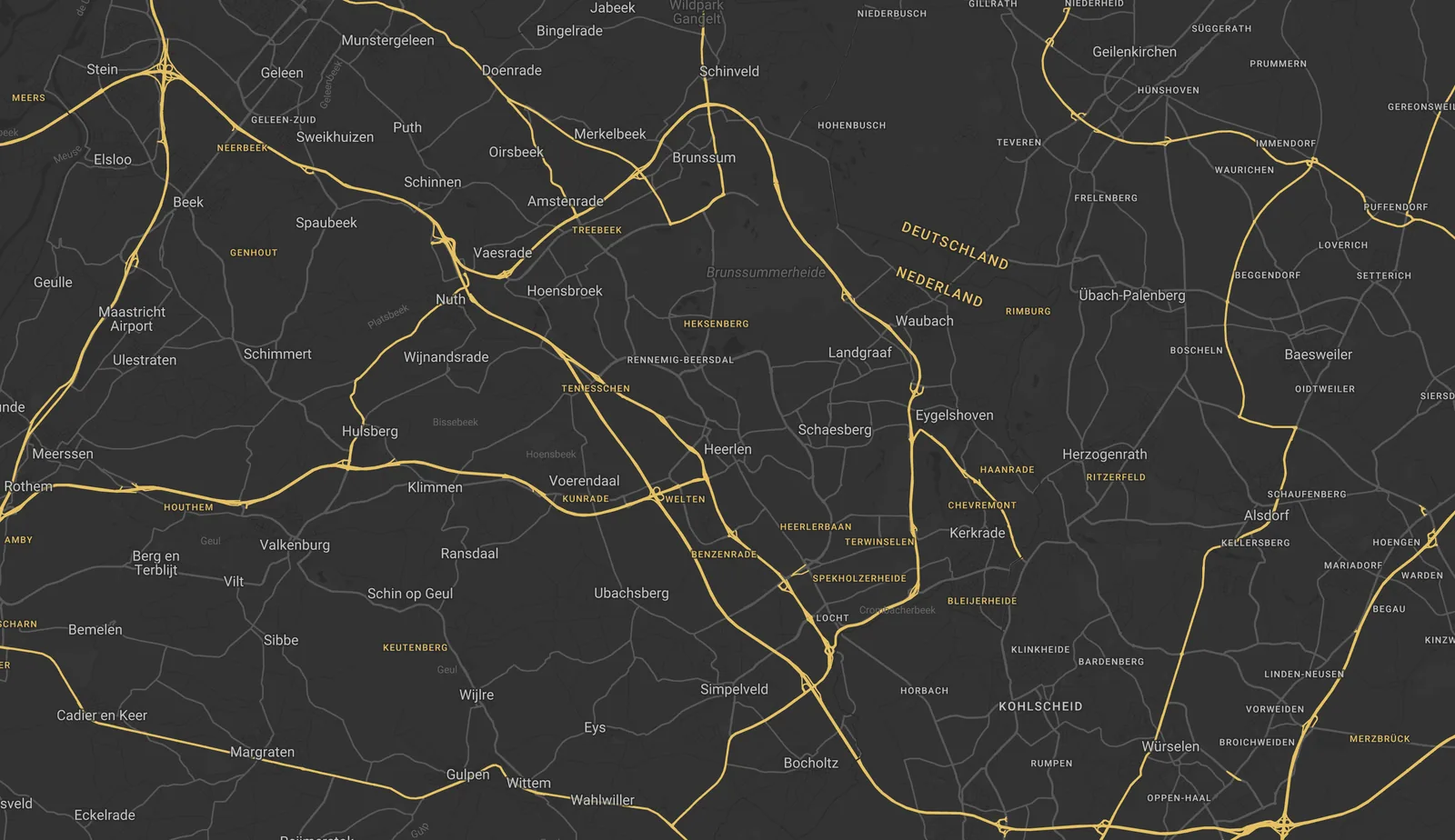
In the Netherlands Dysun Energy delivers the systems through certified installers. They assess the connection, the set-up and the cabling on site, and carry out the work in line with the applicable standards. We take care of the technology, the documentation and the support behind it.
If you are an installer or distributor yourself and want to offer larger set-ups, the partner programme is the starting point. It includes fleet management for your portfolio, manuals and technical support in working out a configuration.
Put your situation to us
Every larger set-up starts with the same questions: what do you use, what do you generate, what hangs on your connection and what do you want to achieve with storage? Tell us, and we will look together at which configuration fits and what is and is not feasible. Calling works too, on +31 (0)85 800 1730.