

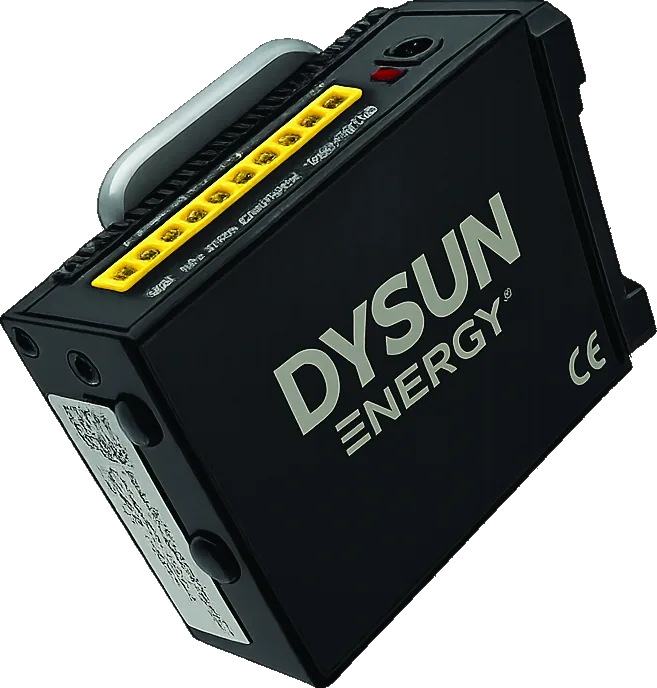
Your battery can trade on the electricity market too

The price of electricity is not fixed: it moves with supply and demand. A smart home battery can respond to that by storing when electricity is cheap and feeding back when the price rises. That is trading on the electricity market, and it happens without you having to do anything for it.

Electricity is not worth the same every hour

On the electricity grid, supply and demand have to be in balance at every moment. If the wind blows and the sun shines while little is being used, electricity is cheap. If generation drops away at a moment when everyone is using at once, the price climbs.

Without storage you sit that movement out passively: you buy when you happen to consume and feed back when the sun happens to shine. With a home battery you shift those moments. You store when prices are low and use or sell that energy when they are high. Besides saving on your own consumption, that creates a second way in which your battery delivers value.

That does not happen in one place. There are several markets on which electricity is traded, each with its own rhythm and its own purpose. Your battery can only take part if there is software behind it that follows the prices and decides in time.

The energy management by Dysun Energy on a tablet and a phone, with the home's energy flows in view

Three markets where your flexibility can go

FlexGrid, the energy management system behind your installation, trades on the day-ahead market, the imbalance market and local energy markets. They differ mainly in how far ahead they look.

The day-ahead market looks a day ahead

On the EPEX Day Ahead market, electricity is traded a day in advance. Tomorrow's prices are therefore known today. That gives room to plan the day before: when the battery has to be full, when it may run down and when your car is best charged. That way you benefit from price swings and help prevent grid congestion.

The imbalance market corrects in real time

The imbalance market exists to restore the balance between supply and demand on the grid at every moment. Anyone who can take in or give out electricity at exactly the right moment is valuable there. A smart home battery can deliver that flexibility: storing when there is too much electricity, feeding back when there is too little.

Local energy markets play closer to home

Besides the national markets, FlexGrid also trades on local energy markets, where supply and demand in the immediate surroundings are brought together. That keeps energy closer to where it is generated and relieves the grid at the points where the pressure is highest.

What you need in order to take part

Trading on the imbalance market asks three things. If one of them is missing, your battery stays a buffer for your own consumption and does not take part in the market.

A dynamic energy contract

The prices on the imbalance market move with supply and demand. Only with a dynamic energy contract do those changing rates actually reach you. On a fixed rate you notice nothing of the difference between a cheap and an expensive hour, and the reason to shift falls away.

A smart home battery

You need storage to hold energy until the moment it is worth more. That goes with software that manages the process itself, without you stepping in. The FlexVolt One is built for that: 95% of the capacity is usable and the cells are good for 7,000 cycles, so daily charging and discharging is not an exception.

An aggregator or energy supplier

As a private individual you cannot go to market yourself. That takes an aggregator or an energy supplier with the right licence. They bundle the flexibility of many home batteries and offer the whole as one package on the imbalance market.

What trading returns depends on your consumption, your contract and the market prices at that moment. We make no promises about that in advance.

The FlexGrid HEMS module by Dysun Energy driving the energy flows in the home

Many homes as one virtual power plant

A single home battery is too small for the market to notice. If many are tied together, they behave as one installation that can take in and give out electricity. That is a Virtual Power Plant: not a building with turbines, but software that drives scattered batteries as a whole.

FlexGrid makes that possible. The system supports more than 500 communication protocols and so talks to many different energy systems. With AI it forecasts your consumption, your solar yield, your charging moments and your heat demand, and on that basis decides when charging pays and when feeding back is better. Several installations together deliver extra income and reduce grid congestion.

You keep sight of what happens. FlexGrid shows in real time what you generate, what you use and what goes in and out of the battery, and warns you by SMS when something goes wrong.

With a dynamic supplier you get the most out of moving prices

Dysun Energy works with suppliers of dynamic electricity contracts to get the most out of moving prices. Your battery charges automatically when energy is cheap and feeds back when the price rises. You do not have to follow tariffs or switch devices on and off; the control does that for you.

That combines three things that normally stand apart: self-consumption of your own solar energy, flexibility that the market asks for, and the yield that follows from it. A dynamic contract is the key that unlocks all of it.

What else trading returns

Taking part in the market touches more than your energy bill. It also changes what your installation means for the grid and for the way electricity is generated.

A revenue model alongside your saving

By responding to price fluctuations you store energy during low prices and feed back at peak moments. That comes on top of what you already save by using your own solar energy yourself instead of feeding it back.

You help keep the grid in balance

By balancing supply and demand you contribute to preventing overloading of the electricity grid. Exactly at the moments the grid is under pressure, your battery does the opposite of what causes the peak.

It runs completely automatically

Smart energy storage works on its own: the system charges when prices are low and discharges at high prices. You do not have to follow the market or set anything by hand. If you do want to watch along, you see in real time what happens.

More room for sun and wind

Trading on energy markets encourages the use of renewable sources such as solar and wind, because the generated electricity is stored instead of lost during a surplus. That makes it not only financially interesting but also a sustainable choice.

Curious whether trading suits your situation?

Tell us what you use, what you generate and which contract you have. Then we explain which set-up goes with that and how your battery can take part in the market. Advice without obligation.