

The hybrid inverter is the device where everything comes together: the direct current from your solar panels, the storage in your home battery and the alternating current of your home and the grid. The FlexAmp One does that work in one device, in a single-phase version up to 6 kW and a three-phase version up to 12 kW.
What a hybrid inverter arranges for you
Solar panels deliver direct current, your home and the grid work on alternating current, and a battery stores direct current again. Somewhere, someone has to tie those three worlds together, every second of the day.
Usually that takes two devices: an inverter for the panels and a charger for the battery. The FlexAmp One does both. It converts the yield from your roof into usable power, charges and discharges the battery and handles what goes to the grid.
That saves space in the meter cupboard or the utility room, and it saves couplings between devices from different brands that do not always understand each other. The compact format saves installation space and the inverter supports parallel connection, so power can be added if your installation grows later.
The FlexAmp One is made for lithium iron phosphate batteries (LiFePO4), such as the FlexVolt One, and works in homes as well as in commercial installations.
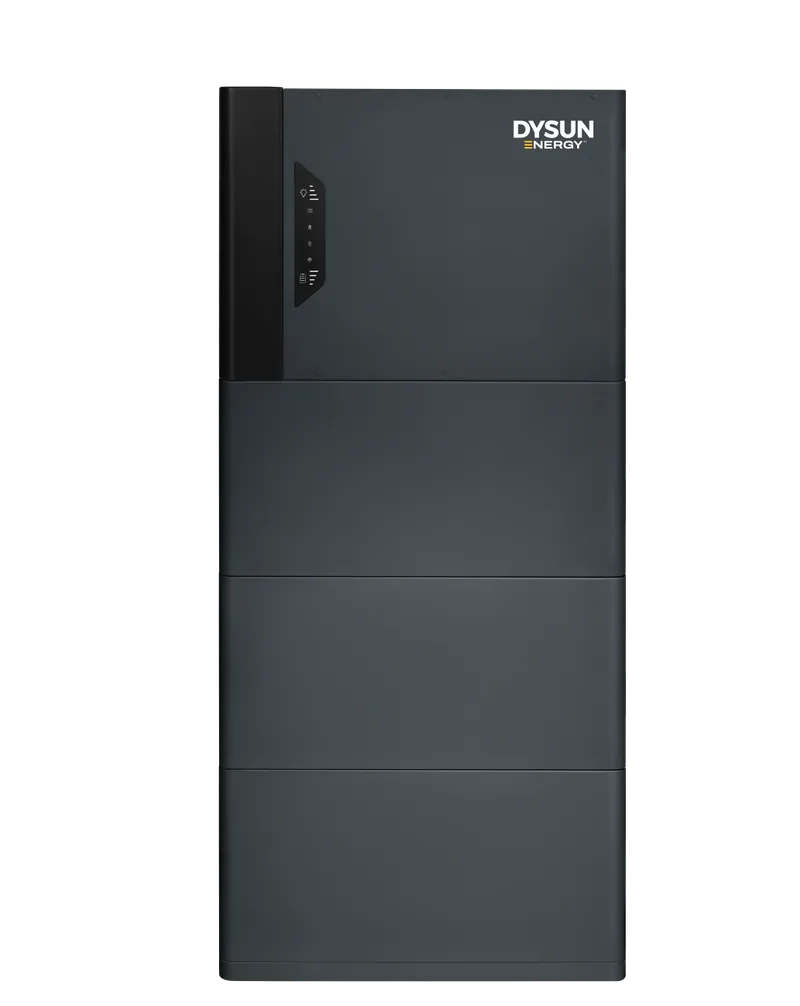
- AC power
- 3.68–12kW
- MPPT trackers
- 2per unit
- MPPT efficiency
- 99.9%
- To backup
- < 10ms
Why two MPPT trackers matter
An MPPT tracker continuously looks for the point at which a string of solar panels delivers the most power. That point shifts all day with the position of the sun, the temperature and the shade. Both versions of the FlexAmp One have two, and that is not a detail on a specification sheet.
Two roofs do not have to do the same thing
Panels facing east and west peak at different moments and at different voltages. With two trackers you drive both strings separately, so one does not drag the other down. With one tracker you have to choose, or put all panels on the same roof surface.
Shade stays limited to one string
A chimney, a dormer or a tree pushes down the yield of the panels beneath it. If that string is on its own tracker, the loss stays there. Meanwhile the second string simply carries on at its own optimum.
Little is left behind between roof and meter cupboard
The MPPT control extracts 99.9% of the available power from the strings. Over a year the European efficiency counts most, measured across realistic partial loads: 96.3% single-phase and 97.5% three-phase.
When the grid drops out, there is still light
An inverter that only does something when the sun shines and the grid works lets you down at the most annoying moment. That is why the FlexAmp One has a backup output of its own and can run in three kinds of installation.
Within ten milliseconds the backup is live
If the grid fails, the FlexAmp One switches on its 230 V backup output within 10 milliseconds. That is so short that most devices notice nothing: your fridge keeps running, your router stays online, the lighting flickers at most.
Which circuits go onto that output you decide together with your installer. If you want the whole home to switch over automatically, the FlexSwitch One belongs with it: an automatic transfer switch that changes over within 50 milliseconds and switches back by itself after 30 seconds of a stable grid.
Three ways to deploy the system
The system suits three applications. On-grid you simply work with the grid and use the battery to shift your own sun to the moment you need it. On-grid with backup adds a protected circuit that keeps running when the grid is down.
Off-grid, the installation stands entirely on its own, without a grid connection. Which set-up suits you depends on your connection, your consumption and on what absolutely has to keep running during an outage.
The two versions side by side
Which version you need follows from your grid connection. With single-phase you end up at the FlexAmp One 3.6, 5 or 6. With a three-phase connection you choose from the 8, the 10 or the 12. Within that range, your generation and your consumption decide which power rating fits.
FlexAmp One 3.6 / 5 / 6: single-phase
- Nominal AC power
- 3.68 / 5 / 6 kW
- Apparent power
- 7.36 kVA
- Grid voltage
- 230 V
- Grid frequency
- 50 / 60 Hz
- MPPT trackers
- 2
- Max. PV voltage
- 480 V
- Current per MPPT
- 20 A
- MPPT efficiency
- 99.9%
- European efficiency
- 96.3%
- Backup output
- 230 V, < 10 ms
- Communication
- RS-485 · wifi · bluetooth · LAN · 4G
- Certification
- CE · IEC/EN 62619 · UN 38.3
FlexAmp One 8 / 10 / 12: three-phase
- Nominal AC power
- 8 / 10 / 12 kW
- Max. apparent power
- 8.8 / 11 / 13.2 kVA
- Grid voltage
- 380 / 400 / 415 V
- Grid frequency
- 50 / 60 Hz
- MPPT trackers
- 2
- Max. PV voltage
- 1000 V
- Current per MPPT
- 16 A
- MPPT efficiency
- 99.9%
- European efficiency
- 97.5%
- Backup output
- 400 V (three-phase), < 10 ms
- Communication
- RS-485 · wifi · bluetooth · LAN · 4G
- Certification
- CE · IEC/EN 62619 · UN 38.3
Values as they appear in the product documentation. Request the full datasheet for dimensions, wiring diagrams and the exact figures per power variant.
Connected and controlled the way it should be
An inverter that hangs well but does not talk to the rest of your installation leaves yield on the table. That is why the FlexAmp One is prepared for both the installation and the control side.
Several ways to make a connection
The single-phase version communicates over RS-485, wifi, bluetooth, LAN or 4G. That means there is a workable route out of virtually any meter cupboard, including where the wifi signal just does not reach or where a fixed network cable is not an option.
The inverter also decides the moment
The energy management system is built into the inverter and drives the battery on dynamic tariffs, forecasts and your own consumption. FlexGrid extends that control to the rest of your installation.
Fitted by a certified installer
In the Netherlands, Dysun Energy delivers through certified installers. They decide the set-up, connect the strings to the right tracker and record which circuits go onto the backup output. We supply the systems and the support behind them.
Certification of the single-phase version
Key features
What makes the FlexAmp One special
One inverter for sun, battery and grid, in a single-phase version up to 6 kW and a three-phase version up to 12 kW.
Inverter and charger in one
The inverter for the panels and the charger for the battery sit together. That saves space and couplings between brands that do not always understand each other.
Two MPPT trackers
Two roof surfaces are driven separately, so shade or a different orientation does not drag the other string down.
Little loss along the way
99.9% MPPT efficiency; across a full year 96.3% European efficiency single-phase and 97.5% three-phase.
Its own backup output
If the grid drops out, the backup output is live within 10 milliseconds.
Three ways to deploy it
On-grid, on-grid with backup, or fully off-grid: the same inverter, a different set-up.
Grows with the installation
Parallel connection is possible, so power can be added if the installation grows later.
Which FlexAmp suits your roof?
Send us your connection, the power on your roof and how it is spread across the roof surfaces. Then we work out which version fits and how the strings are best divided across the two trackers.